
Last updated November 17, 2026
 Home additions & ADU
 Kitchen remodeling
 Bathroom remodeling
 Roofing
 Windows & doors
 Driveway & pavers
 Fence
Free written scope consultation - allowances, timeline, and change-order rules on paper before a single trade is scheduled
Construction Warning Signs: A Summerlin Homeowner’s Reference Guide
A hairline crack in stucco is almost always cosmetic. A stair-step crack that runs diagonally from the corner of a window and has widened by a sixteenth of an inch since last year is a different conversation entirely – it points at foundation settlement or framing movement. Confusing the two is one of the most expensive mistakes a Summerlin homeowner can make, in both directions. People panic over shrinkage cracks that mean nothing and spend money on needless stucco work, or they ignore a moving crack for three summers because it “looks like the other one.” This guide walks through how to tell them apart, plus the roof, attic, and soil clues that matter in Summerlin’s stucco-over-wood-frame homes built through the 1990s and 2010s boom.
Quick Answer
The warning signs that matter most in a Summerlin home are cracks that grow over time, stair-step patterns radiating from window corners, doors that stop latching cleanly, linear grout cracking across tile floors, ponding water or separated flashing on low-slope roof sections, and condensation stains in the attic near air handlers and roof penetrations. Cosmetic stucco shrinkage cracks are fine and stable; anything that changes shape, width, or location between seasons deserves a professional look. The difference between cosmetic and structural is almost always movement over time, not the crack itself.
Styles & brands we work with
- Kitchen remodeling
- Bathroom remodeling
- Home additions & ADU
- Roofing
- Windows & doors
- Driveway & pavers
- Fence
Table of Contents
- Reading Stucco Cracks: Cosmetic vs. Structural
- Low-Slope Roof Warning Signs in Summerlin
- What Caliche Soil Movement Looks Like From Inside
- HVAC Condensation Damage: Two Spots Most Inspections Miss
- Signs a Past Contractor Cut Scope
- A 10-Step Seasonal Walkthrough for Your Home
- Common Mistakes to Avoid
- When to Call a Professional
Reading Stucco Cracks: Cosmetic vs. Structural
Stucco cracks for two reasons: it shrinks slightly as it cures, and it moves with the wood frame underneath. In Summerlin, where the sun bakes exterior walls through long, dry summers, the stucco on a south- or west-facing wall will expand and contract more than any other side of the house. A small crack there, thinner than a credit card, is usually shrinkage and nothing else. It’s stable, it’s not going to grow, and it’s not a problem to worry about.
What changes the diagnosis is pattern, location, and growth. Here’s how to read what you’re seeing:
- Hairline cracks in a random pattern, distributed evenly across a wall, usually cosmetic shrinkage. If they haven’t changed in two years, they won’t.
- A single vertical crack at the center of a long wall, roughly straight, is often a control joint or the result of framing lumber drying out. Watch it for a season.
- Stair-step cracks that run diagonally from the corner of a window or door opening are the ones worth a professional look. They tend to reflect movement at the corner of the frame where stress concentrates, and they should be re-measured every six months.
- Cracks wider than a 1/16 inch at their widest point, whether at the top of a window corner or along a wall, cross into structural territory. So does any crack where one side sits higher than the other.
Measure the crack and write the date and width somewhere you’ll find it again. A crack that measures 1/16 inch in March and 3/32 inch by September tells a contractor far more than the crack itself. Movement, not width, is the diagnostic. If you don’t want to measure it yourself, take a dated photo every few months against a coin or a tape for scale. Contractors you call later will thank you.
The other half of this: don’t repair a moving crack. Patching stucco over a structural crack just hides it for a season and creates a fresh problem when the patch fails. Diagnosis first, repair second.
Low-Slope Roof Warning Signs in Summerlin
Summerlin’s Mediterranean and Spanish Colonial designs almost always include some flat or low-slope roof sections – over entries, patio covers, garages, or second-story bump-outs. Those sections have different failure patterns than the pitched shingle roof above them, and most homeowners only think to look at the shingle side. The flat areas are where the subtle, slow damage happens.
Ponding water
Flat roof sections should drain within 48 hours after rain. Standing water that lingers longer, or any visible low spot where dirt accumulates, is a ponding problem. In Summerlin the low rainfall can hide this for months at a time, so the easiest way to check is to look for a dry, water-stained ring on the membrane or a dirt line that shows where the last puddle was. Repeated ponding in the same spot shortens the life of any roof membrane, and it usually points to a settled or clogged drain rather than the surface itself.
Blistering and bubbling
When you see blisters – raised pockets on the membrane – they usually form because moisture is trapped under the surface, either from a small leak above or from condensation below. Each blister is a weak spot. Left alone, the top of the blister cracks and the next rain enters. A blister the size of your palm is worth a professional inspection. A cluster of small ones across the same area almost always traces back to a single moisture source.
Flashing separation
Flashing is the metal where the roof meets a wall, a parapet, or a chimney. It’s sealed with caulk and mechanical fasteners, and in Summerlin’s heat, that caulk degrades faster than any other sealant on the house. Look for gaps where the flashing pulls away from the stucco or the wall, curled edges, or caulk that has gone soft or cracked. Flashing failure is the leading cause of interior water stains along upstairs walls, and it’s easy to check from the ground with binoculars twice a year.
If any of these show up, that’s a roofing problem worth a free estimate. We install GAF-, CertainTeed-, and Owens Corning-certified systems, so the fix here is straightforward once we’ve confirmed the source.
What Caliche Soil Movement Looks Like From Inside
Much of the Las Vegas Valley sits on caliche – a hard, calcium-cemented soil layer that expands and contracts with moisture in a way that standard concrete slab designs account for, but only to a point. Summerlin’s neighborhoods built over the 1990s and 2010s sit on slabs poured under those conditions. The symptoms of soil movement show up first inside the house, not on the foundation itself. Here’s what to watch for:
- Doors that stop latching or swing differently. A bedroom door that used to close cleanly and now scrapes the frame, or a front door that swings on its own, is telling you the frame around it has moved. Watch for changes that appear gradually over a dry season.
- Linear grout cracking across tile floors. Random grout cracks happen. Grout that cracks in a straight line that crosses several tiles and continues, or a crack that traces along the perimeter of a room, follows the edges of the slab where stress is highest. That’s the pattern worth noting.
- Garage door gap inconsistencies. Stand in front of the closed garage door and look at the gap between the bottom of the door and the slab. It should be even across the width. If it’s tighter on one side and opens on the other, the slab under the garage has likely shifted slightly. That’s a symptom worth tracking, not an emergency.
- Stair-step cracks at exterior corners. The same pattern we covered with stucco, but if you’re seeing interior corner cracks near a window or door opening at the same time as a door swing change, the two are usually connected.
None of these, on their own, is a reason to panic. The pattern is. Take photos of all four of the symptoms above in the same week, and check them again six months later. If two or more are actively changing, call a professional. If they’re stable, keep watching. Soil movement can settle or stop, and it doesn’t always mean a foundation repair is coming.
HVAC Condensation Damage: Two Spots Most Inspections Miss
The attic is the warmest, driest, and least-visited part of a Summerlin house, and it’s where condensation from the cooling system causes quiet, hidden damage. Two specific spots deserve your attention every summer:
1. The secondary drain pan line
Every air handler has a primary condensate drain and a secondary pan underneath. The primary drain is what flows down the line in normal operation. The secondary pan is the emergency catch – it should be bone dry. If you see standing water in that pan, or rust staining inside it, the primary line is blocked or partially blocked and the system is close to overflowing into the attic. This is a routine maintenance point, and it’s the one most homeowners never look at because it sits behind the air handler and, in many homes, only becomes visible after a ceiling stain appears below. Check it once a year and it will never surprise you.
2. Where the refrigerant line enters the air handler
The refrigerant line is insulated, but the insulation at the entry point to the air handler is where it typically breaks down. Condensation forms on the bare copper, drips down the case, and creates a stain on the platform or ductwork. Look for dark, water-stained spots at the base of the unit or along the platform edge, or dark staining on duct insulation where it meets the air handler. Both are signs the insulation needs attention before the problem spreads to framing or ceiling drywall below.
An attic inspection is not a place to do exploratory work on your own. Attics in Summerlin in summer reach temperatures that are dangerous without proper preparation, and the equipment is pressurized, electrical, and connected to your home’s most vulnerable systems. This is a “what to look for” checkpoint, not a DIY project. Call a licensed technician to look if you see either of the signs above.
While you’re in the attic, look at the roof deck above those two spots. Water staining on the underside of the roof sheathing – usually visible as a dark, ringed pattern on the plywood or OSB – tells you the roof above has leaked at some point, even if you never saw a drip inside.
Signs a Past Contractor Cut Scope
Not all construction problems show up as cracks. Some are inherited – the previous owner had work done, and they hired the low bidder. Ten years later, the shortcuts are still visible to a trained eye. Here are the ones we look for first:
- Missing or undersized flashing. Flashing should be sized to the job. Small, narrow, screw-on flashing at a roof-wall junction or around a window head is a giveaway that someone chose the cheapest option, not the right one. Undersized flashing also means the wall relies more on caulk than it should.
- Grout where caulk belongs. Grout and caulk are not interchangeable. Grout goes between tile. Caulk goes wherever two different materials meet, including where a countertop meets a backsplash, and where two tile surfaces change plane at an inside corner. Grout in those spots cracks by design, and inside three or four years, it starts letting water through.
- Caulk used where flashing belongs. The other direction of the same mistake. If a roof penetration or window edge has been sealed only with caulk and no flashing underneath, it will leak eventually, no matter how neatly the caulk is applied.
- Pavers installed without proper edge restraint. On a driveway & pavers project, a missing or short edge restraint lets the field spread under heat and pressure, and the pavers work loose at the driveway apron first. Look for pavers that have shifted sideways at the edge of the driveway or walkway.
- Skipped waterproofing behind tile. In a shower, waterproofing is meant to sit behind the tile, not be replaced by the tile itself. If grout lines in a shower darken and never dry, or the grout wicks moisture up the wall from the base, the waterproofing behind the tile is usually the culprit.
- Fence posts too shallow or set without proper footing. A fence installation done right has posts set deep enough to hold through wind. Fenced yards that sag at the top of the post, or posts that rock when you lean on them, were likely set shallow. Look for a post that moves when you push on it while the adjacent posts do not.
- Window and door trim without a backer bead. If exterior trim at a window or door has separated from the stucco by a hairline gap that fills with dust, that gap has been open since the trim went in. James Hardie trim installed correctly lands tight against the substrate; a visible gap means the trim was placed over a surface that wasn’t prepped.
When we walk a Summerlin home for a renovation, these are the first things we look for, because they change the scope of what a project actually needs. What looks like a simple bathroom refresh is sometimes a re-waterproofing job underneath. That’s why we estimate in person and write the line items out.
A 10-Step Seasonal Walkthrough for Your Home
Two walkthroughs a year – one in spring before the heat and one in fall after it – will catch almost everything on this list while the fix is still small. Here’s the order we recommend. Allow an hour, and bring your phone for photos.
- Walk the exterior perimeter. Look at all four sides of the stucco. Note any new cracks with a photo and a measurement. Pay extra attention to the south- and west-facing walls.
- Check every window corner from outside. Look for stair-step cracks at the four corners of each window, and check the caulk line where the window frame meets the stucco. Any gap larger than a hairline gets noted.
- Binocular check of the roof edge and flat sections. Look for lifted shingles on the pitched sections, and ponding stains or blistering on the flat sections. Check the flashing at wall junctions.
- Walk the interior door line. Open and close every door in the house. Note any that scrape, don’t latch cleanly, or swing differently than they did six months ago.
- Look down at tile floors. Scan for linear grout cracks, especially along the edges of rooms and across thresholds.
- Garage door gap check. With the door closed, look at the gap between the bottom of the door and the slab. Photograph it straight on so you can compare to next season.
- Attic check – secondary pan and refrigerant line. If you’re comfortable entering the attic safely, check the secondary drain pan (should be dry) and the base of the air handler (should be stain-free). Bring a flashlight and go early in the morning.
- Under-sink and behind-toilet check. Look for caulk that’s separating, grout that’s cracking at inside corners, or any dark staining in the cabinet under the sink.
- Paver and driveway edge check. Walk the driveway and any paver walkways. Look for pavers that have shifted sideways or up, especially at the apron where driveway meets street.
- Fence line check. Push on each fence post at hip height. Any post that moves more than the others needs a look.
Save the photos to an album with the date. A pattern over two or three seasons tells you the story, and it saves you from having to trust memory when you call for an estimate.
See the difference
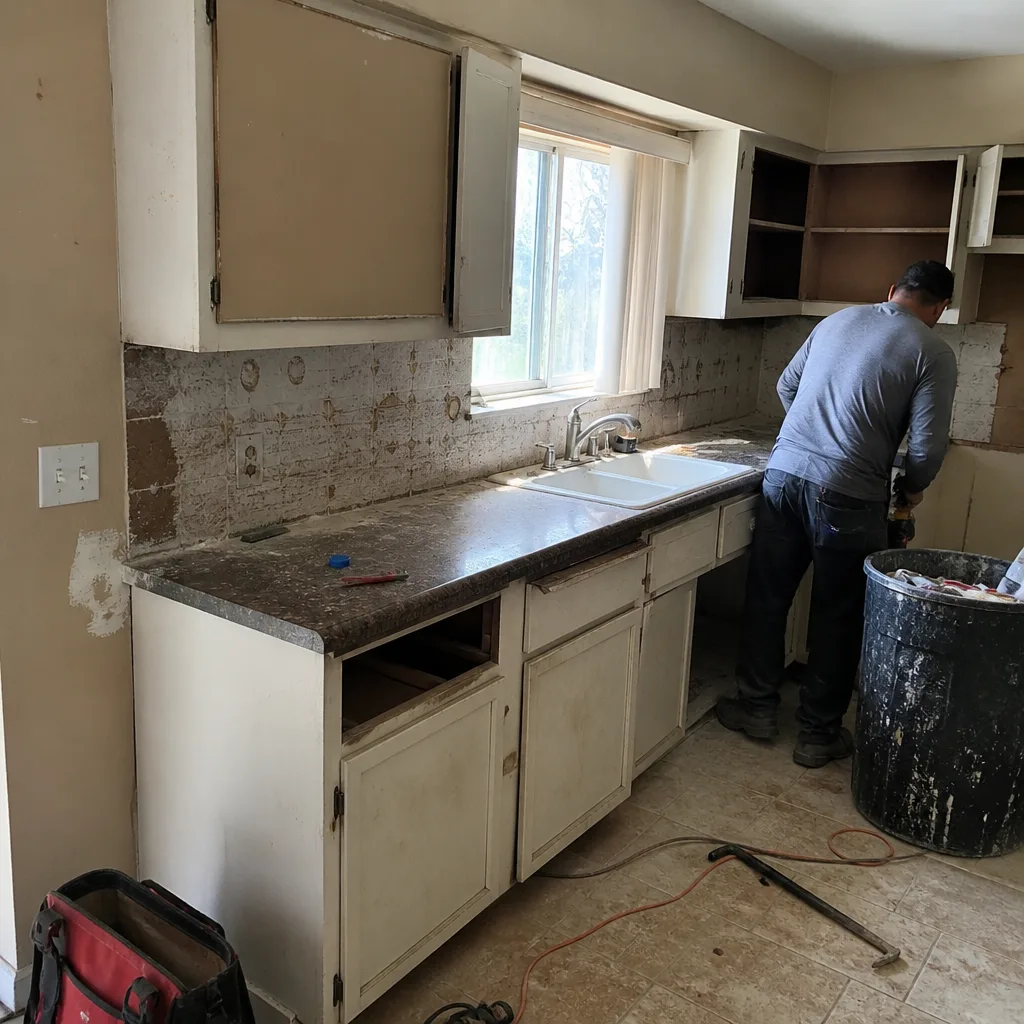 Before
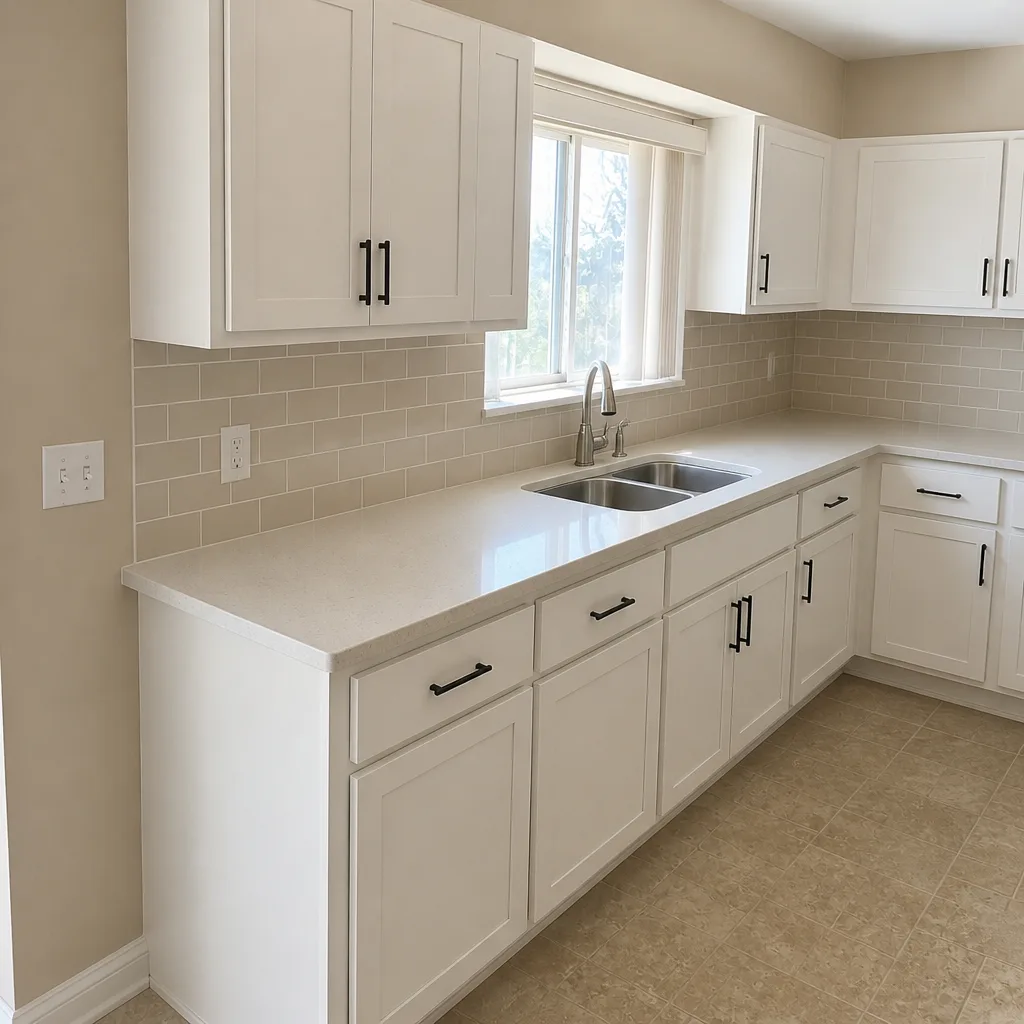 After
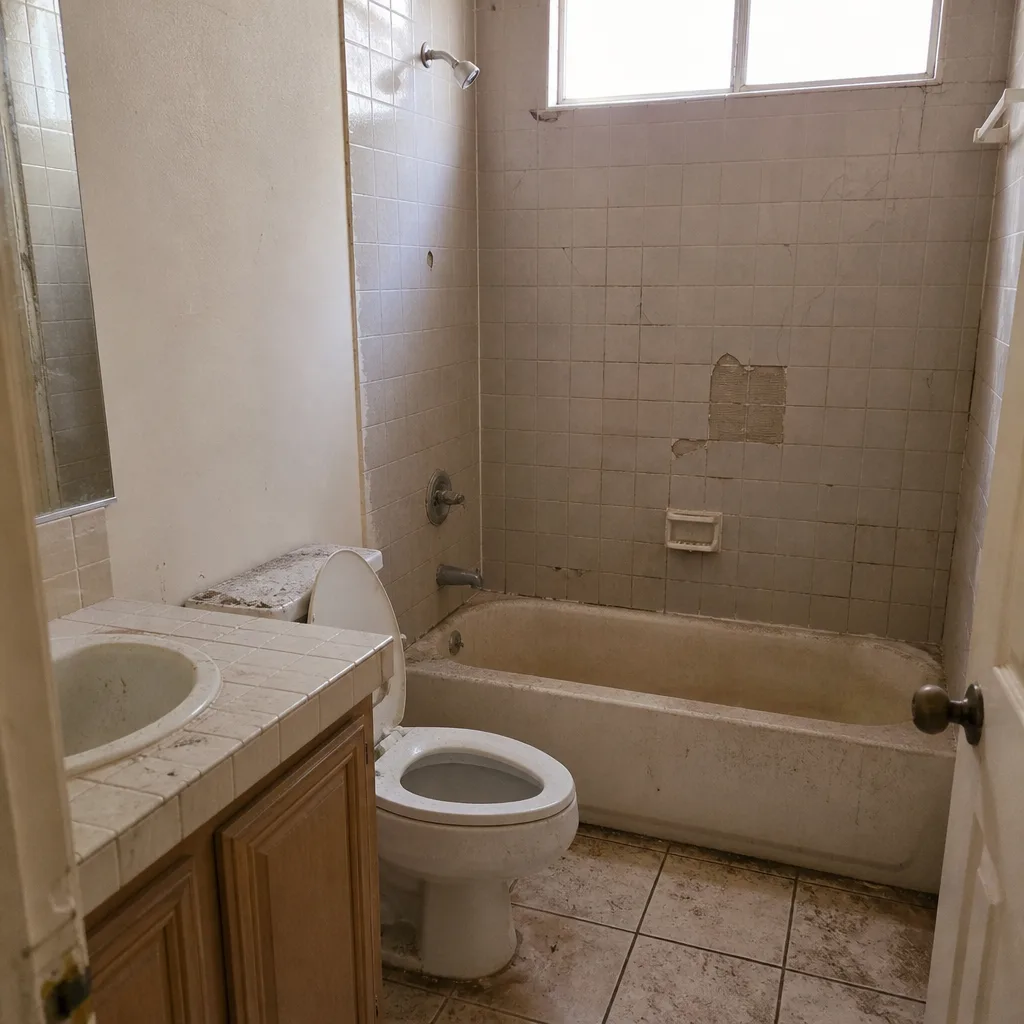 Before
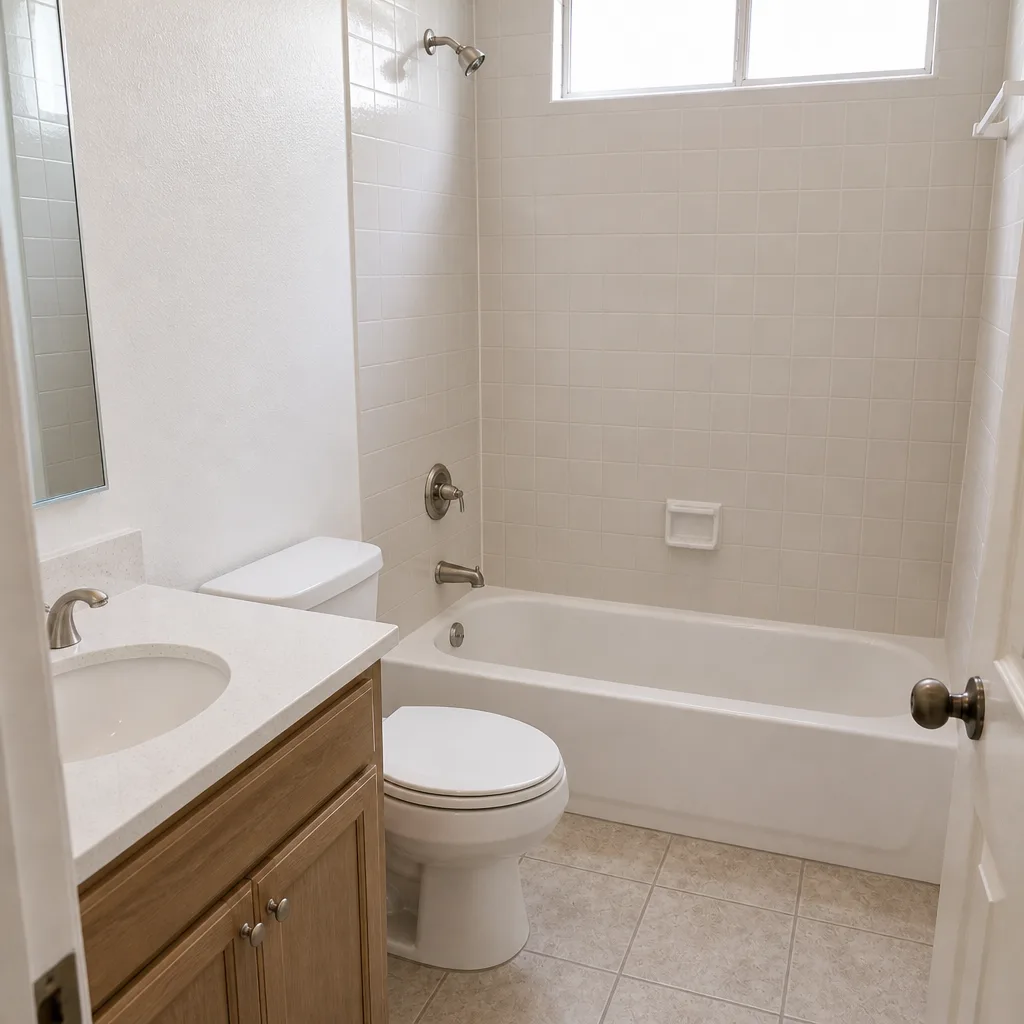 After
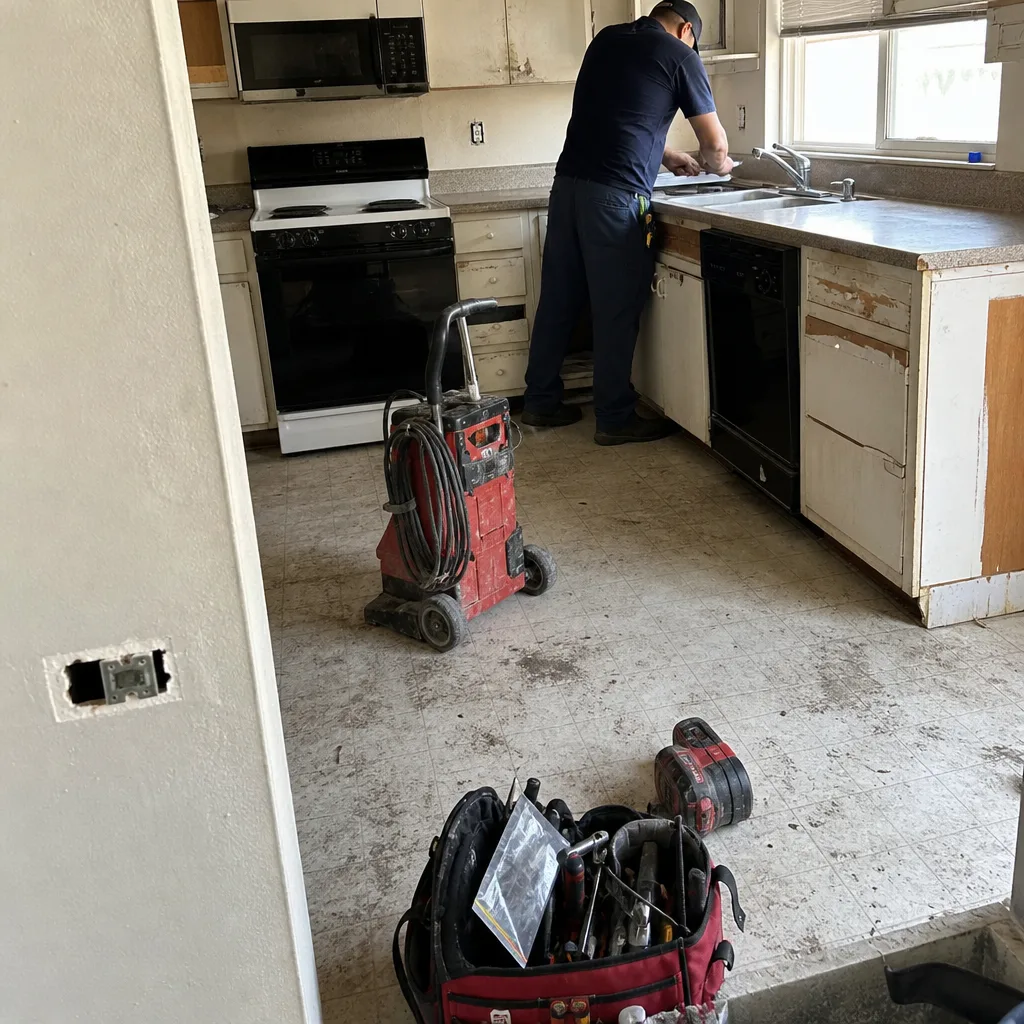 Before
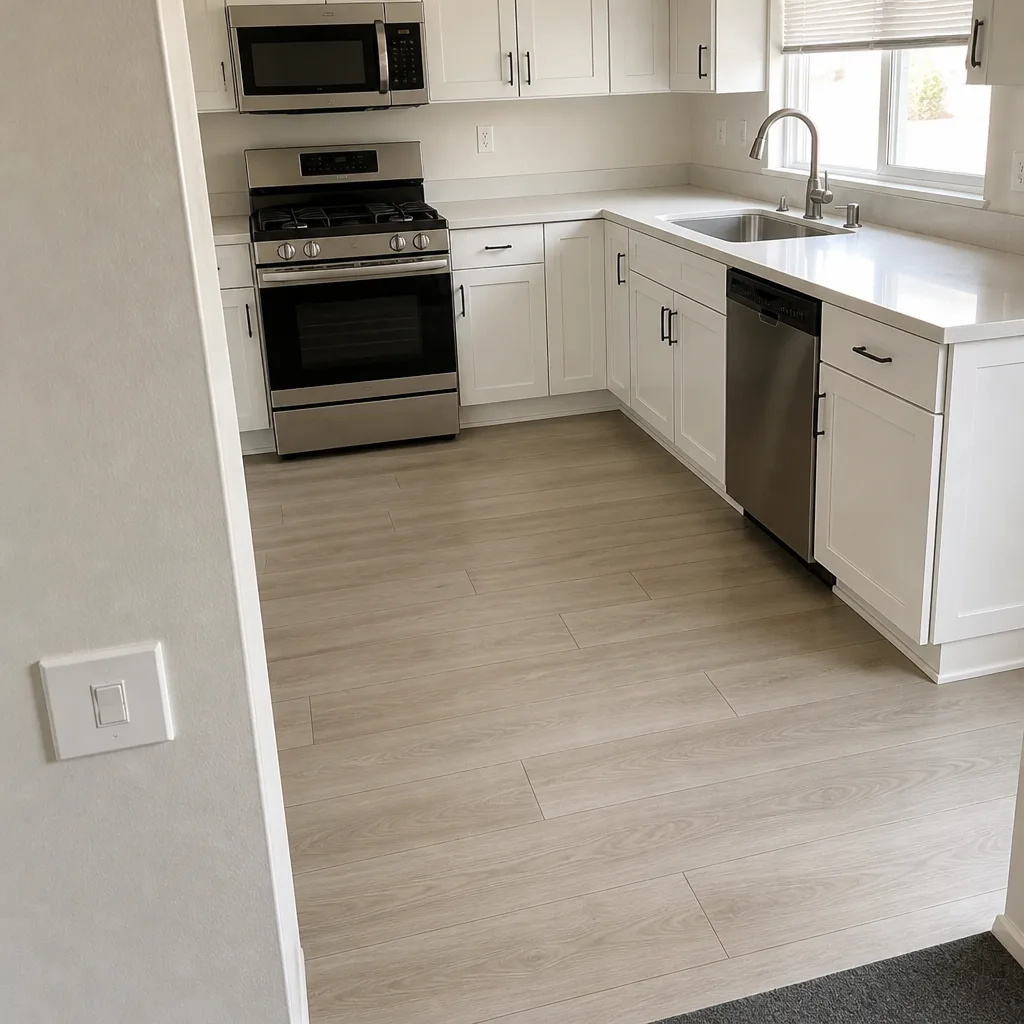 After
So You’ve Spot the Signs. Now What?
The instinct when you find a warning sign is to guess at what it means and then plan a project around the guess. That’s backwards. What you’re really doing when you spot a crack or a stain is identifying a question. The right next step is a professional look at the actual condition, not a project plan.
That’s why we do every estimate in person. Photos on a screen don’t tell us whether a stair-step crack is stable or moving; we need to measure and inspect. A stucco crack at one corner of a window might be a $300 patching job. The same crack, if it runs along the top and down one side and connects to a door that no longer swings correctly, is a foundation-and-framing conversation. The estimate lines up with the actual scope, and the price you see on paper is the price that gets set.
Because we handle the whole house from one account – the roofline and the kitchen, the driveway and the bathroom, the fence and the addition – a Summerlin homeowner who calls us for one warning sign gets the whole house looked at in the same visit. If a moving crack and a roof flashing issue are showing up in the same season, one inspection tells you how they’re connected. Whether the answer is a small repair, a re-waterproofing job, or a longer-range plan for a full home additions & ADU conversation, you already know what the house is telling you before you commit.
Common Mistakes to Avoid
- Patching a structural crack without diagnosis. A patched crack in the stucco hides the movement for one season, and then the new stucco cracks in the same place. The crack hasn’t stopped; you’ve only lost the visual evidence. Diagnose first, repair second.
- Ignoring a slow change because it “looked like that last year.” Most structural warning signs in Summerlin homes move at a rate you can’t see in a single look. That’s why we recommend dated photos and measurements. Six-month comparison beats a fresh opinion.
- Skipping the secondary drain pan every year. The secondary condensate pan is the number-one cause of unnoticed attic damage in stucco-and-frame homes. If the primary line clogs and nobody checks the pan, the first sign is a ceiling stain.
- Treating grout and caulk as interchangeable. Grout in a material transition cracks by design, and cracked grout in a shower or at a countertop edge lets water through. Use caulk anywhere two different materials meet.
- Assuming a leak-free stretch of weather means the roof is fine. In Summerlin, a low-slope roof section can go a whole dry season without showing a leak, while the failing flashing or ponding area underneath keeps degrading. Check the roof itself, not just the ceiling below it.
- Fixing pavers or fence posts without checking the base. A paver that lifts or a fence post that moves is telling you the base failed, not the paver or post. Replacing the surface without fixing what’s underneath is a repeat job in two years.
- Writing off one door that sticks as a fluke. One stuck door is nothing. Two doors that stick within the same season, plus a linear grout crack in the same room, is a pattern. Patterns are what deserve a call.
When to Call a Professional
Some signs are worth watching. Others are worth a phone call the same week. A stair-step crack that has widened since you last measured it. Two or more door swing changes in the same season. Linear grout cracking that crosses more than two tiles. Visible ponding on a flat roof section more than 48 hours after rain. Flashing that has visibly separated at a wall junction. A wet secondary drain pan, or refrigerant line staining at the air handler base. Caulk that’s wide open at a window corner or door trim. A fence post that moves when you lean on it. Any of these deserves a professional look before you decide whether the fix is small or not.
Construction Summerlin offers free estimates in Summerlin – call (844) 797-3059. We answer 24/7. Fast dispatch from 7am to 7pm, Sunday through Friday. An estimate is a look at the house, not a sales visit, and you’ll leave the conversation with a written line-item breakdown of what we recommend and why, whether you hire us or not.
Frequently Asked Questions
A stucco crack is cosmetic if it’s hairline, distributed randomly, and hasn’t changed width or length in a year. It’s structural (or at least worth a professional look) if it runs in a stair-step pattern from a window or door corner, is wider than a 1/16 inch at its widest point, or has visibly widened since you last measured it. Take a dated photo and re-measure in six months; if the crack is growing, call for a free estimate.
Caliche is a real feature of the soil under many Las Vegas Valley neighborhoods, and it does expand and contract with moisture changes. Whether it becomes a problem for a specific home depends on how the slab was engineered and how the site was prepared during construction. Watch for the symptoms – door swings, grout cracking, garage door gap – rather than the soil itself. If you see two or more symptoms changing in the same season, that’s when we recommend an in-person look.
Once a year is a good baseline, and twice is better – early spring before the hottest months and after the summer. Walk the low-slope sections yourself from the ground with binoculars in between. If you can safely see the flat sections, look for ponding stains and blistering. If you can’t safely see them, a professional inspection once a year in the spring is worth it. Call (844) 797-3059 for a free estimate if you see anything that concerns you.
An uneven garage door gap usually means the slab under the garage has shifted slightly, or the wall header over the garage has moved. It’s a symptom of movement, not a sign the door itself is broken. Photograph the gap straight on and check it again in six months. If the gap has changed noticeably, or if it appears alongside other movement signs in the house, that’s when to get a professional look.
Yes, in many cases. Grout where caulk belongs, undersized or missing flashing, caulk in place of flashing, no waterproofing behind shower tile, a fence post set too shallow, or trim that isn’t tight against the stucco are all visible to a trained eye. If you’re buying a Summerlin home or planning a renovation, an in-person walkthrough on a free estimate will identify most of these before you commit to a project scope.
That depends entirely on your policy and the cause. Most policies cover sudden damage from a specific event and exclude gradual movement from soil shifting, poor drainage, or settling. Read the exclusions section of your policy before assuming anything, and call your carrier directly with what you’re seeing. We can work with your insurer if the cause turns out to be a covered event, but we don’t make the coverage call. Call (844) 797-3059 for a free estimate on the repair side once you’ve talked to them.
The Bottom Line
The Summerlin housing stock – mostly stucco-over-wood-frame built in the 1990s and 2010s – has a predictable set of failure patterns. Once you know what to look for, the diagnosis gets much easier. Movement matters more than appearance. Pattern matters more than any single crack. And a dated photo twice a year is worth more than an opinion any single day of the year. Watch your stucco corners, your flat roof sections, your door swings, your grout, and your attic pan. Whatever you find, the fix gets bigger the longer you wait. If you’re ready for a free estimate, call (844) 797-3059. We answer 24/7. Fast dispatch from 7am to 7pm, Sunday through Friday.
Written by the team at Construction Summerlin.