
Last updated November 17, 2026
 Home additions & ADU
 Kitchen remodeling
 Bathroom remodeling
 Roofing
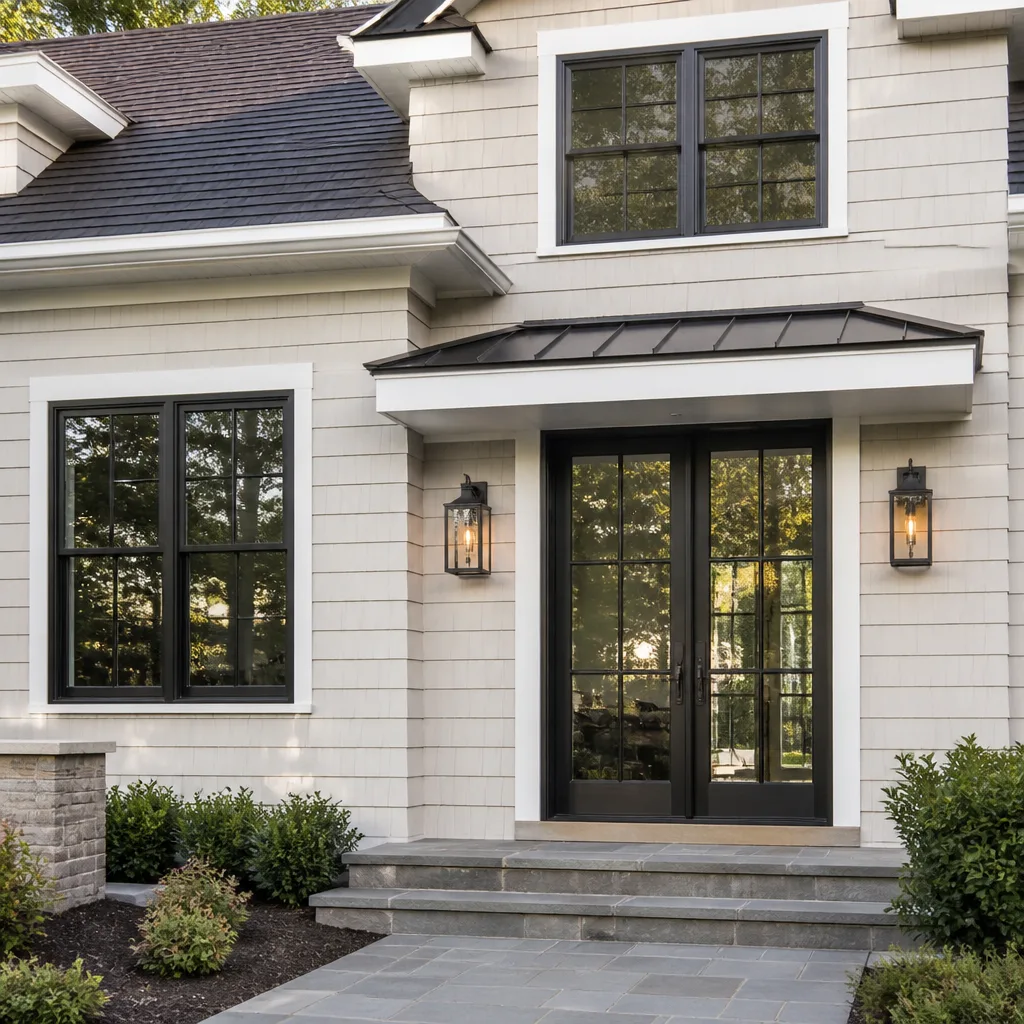 Windows & doors
 Driveway & pavers
 Fence
Free written scope consultation - allowances, timeline, and change-order rules on paper before a single trade is scheduled
Construction Emergency Preparedness Guide for Summerlin Homes
The counterintuitive part of construction emergencies is that the event itself is rarely the expensive one. A missing roof tile, a flooded garage slab, a shutoff valve that fails behind the washing machine: on their own, these are small problems with small price tags. What turns them into major losses is the second failure that arrives two hours later, after the wind dies down or the rain stops, when nobody had a tarp, a sump pump, or an emergency contact ready. In Summerlin, we’ve watched homeowners handle the first hour perfectly and lose the battle in the second. This guide covers the three emergencies that hit Summerlin homes hardest, the contact sequence that protects your insurance claim, and the pre-season work that lowers your odds in the first place.
Quick Answer
The most common construction emergencies in Summerlin homes are monsoon-related roof and foundation water intrusion, windstorm roof damage, and HVAC condensate overflow that quietly rots framing and drywall. Preparation matters more than reaction: document your contractor, HOA emergency line, Clark County building department, and insurance adjuster before storm season, keep temporary mitigation supplies on hand, and address the five structural maintenance items this guide covers. That prep is what separates a $1,200 repair from a five-figure interior loss.
Styles & brands we work with
- Kitchen remodeling
- Bathroom remodeling
- Home additions & ADU
- Roofing
- Windows & doors
- Driveway & pavers
- Fence
Table of Contents
- The Three Construction Emergencies That Hit Summerlin Homes Hardest
- The Emergency Contact Sequence Every Summerlin Homeowner Should Document
- The First Two Hours: Temporary Mitigation for the Three Most Common Emergencies
- What Your Nevada Homeowner’s Policy Covers (and What It Doesn’t)
- Pre-Event Hardening: The Five Structural Items That Reduce Emergency Frequency
- Documentation Protocol: Photographs, Timestamps, and Records That Work Twice
- Where a Full-Scope Contractor Fits in Your Emergency Plan
- When the Emergency Becomes a Rebuild: Scope, Materials, and Timelines
The Three Construction Emergencies That Hit Summerlin Homes Hardest
The vulnerabilities in Summerlin are specific. They’re shaped by the northwest valley’s geography, the housing stock, and the way desert weather behaves. Understanding the pattern is the first step toward preparing for it.
1. Monsoon flash flooding at the foundation. Summerlin sits along the western and northern edges of the Las Vegas Valley, where the terrain drains toward the developed streets. When the summer monsoon arrives, rain that falls on the open desert uphill from your neighborhood doesn’t soak in the way it would in a wetter climate. It runs. It runs across graded desert, onto paved streets, and into whatever grading directs it: sometimes your yard, sometimes your driveway apron, sometimes your slab edge. Homes that sit at the low point of a cul-de-sac or back against undisturbed desert are the most vulnerable. The damage rarely comes from a single dramatic flood. It comes from repeated minor intrusions that saturate the soil against a foundation, work their way under stucco, and compromise slab-edge grading over a season.
2. Summer HVAC condensate failure. This is the quiet one. Every air conditioning system in Summerlin runs long, hard shifts through July and August, and every one of them produces condensate. That water has to go somewhere. When a drain line clogs, a condensate pump fails, or a pan rusts through, the water ends up in your attic, in your wall cavity, or in the ceiling assembly above your living room. The failure is invisible until the drywall stains or the ceiling sags. By then, the moisture has been feeding framing and insulation for days. HVAC failure isn’t usually a construction emergency on its own, but the water intrusion it triggers absolutely is.
3. Post-windstorm roof damage. Summerlin’s summer storm pattern also brings high winds ahead of the rain, and wind lifts tiles, tears fascia, and loses shingles before the downpour. The wind damage is the headline. The water entering through it is the bill. A roof that loses a section of tiles and gets properly tarped within hours is a repair. That same roof left exposed through a night of monsoon rain turns ceiling assemblies, insulation, and sometimes drywall into tear-out. Summerlin roofs take serious sun exposure year-round, and a tired or improperly fastened roof system is one wind gust away from the secondary water failure.
We’ve seen the same pattern repeat in each case: deferred maintenance sets up the failure point, and a weather event triggers it. Your preparation effort should focus on the deferred-maintenance side of that equation.
The Emergency Contact Sequence Every Summerlin Homeowner Should Document
When water is entering your home at 9pm, you don’t want to be searching for phone numbers. The contact list you build before the event is the single most important preparedness tool you own. And the sequence matters as much as the numbers.
- Your contractor, first. Call the contractor who can actually assess and mitigate the damage, and who can produce a scope of work that matches what your insurer will need. Put a residential general contractor with full-scope capability at the top of the list. Not because we’re the only option, but because a roofer who only does roofs will hand you off to a drywall contractor, who hands you off to a framer, and every handoff is a delay in mitigation. One contractor holding the whole scope is what you want.
- Your HOA emergency line, second. Summerlin is heavy with HOA-managed communities, and associations often have emergency provisions for shared elements: common-area drainage, shared roof sections in attached product, perimeter walls and fencing, and sometimes water shutoffs. The HOA needs to be notified early because some associations have vendor relationships and insurance obligations that affect your claim. Also, some HOA documents require notification before external repairs on visible elements. Read yours before you need it.
- Clark County building department, third (or first, if there’s structural risk). If the damage involves structural elements, an unsafe roof, or anything that could affect occupant safety, call the county building department. This is the agency that handles permits and inspections for the work that follows, and there are circumstances where an inspection or a permit is required before certain repairs proceed. Your contractor can usually handle this notification, but you should know the number yourself.
- Your insurance adjuster, fourth. This is the counterintuitive one. Most homeowners call their insurer first and their contractor second. We recommend the reverse. Get mitigation started, get photographs taken, get the damage contained, and then call the adjuster with a clear, documented picture of the loss. An adjuster who arrives to a wet, undocumented mess has to start from zero. An adjuster who arrives to a contained, photographed, well-scoped loss can move quickly.
Write all four numbers on a card and put it in a kitchen drawer and on your phone. Include your HOA manager’s direct line, not just the general number. This is one of the small tasks that pays off enormously.
The First Two Hours: Temporary Mitigation for the Three Most Common Emergencies
Professional help takes time to arrive, and the first two hours are when the damage either gets contained or compounds. The steps below are temporary mitigation only. They’re about buying time, not about doing the repair. Where there’s structural risk or electrical exposure, stop, get people out, and call for help.
Roof breach
- Get a tarp over the breach before the next rain, if it’s safe to get on the roof. If it’s not safe, stay off the roof. Never get on a wind-damaged roof in gusting wind or on a wet surface, and never attempt roof work on a steep pitch. A fall is worse than the water damage.
- Inside, move furniture, electronics, and anything irreplaceable out of the affected zone first. Then put buckets and towels down to catch drips.
- If the ceiling is bulging or sagging, don’t put a bucket under the bulge and walk away. The ceiling can fail. Puncture a small drain hole in a sagging area if it’s safe to do so, catch the water below, and clear the area. This is the one place where controlled damage beats uncontrolled damage.
- Photograph the active water entering before you move anything. Activity shots are documentation gold.
Flooding at the foundation
- Move water away from the house with whatever you have: a wet/dry vacuum, a pump, or a squeegee. Standing water against a slab edge and stucco is the problem you’re solving.
- If water is entering through a door threshold or a garage, sandbags or a simple barrier can divert flow, but only if it’s set before the water gets high. Have bags on hand before the season.
- Shut off power to any flooded area at the panel before you step into standing water indoors. Electrical and water are a dangerous combination and this is not the moment to test it.
- Photograph the water line on walls, the extent of the intrusion, and the water source direction. Direction of flow matters for grading-related claims.
HVAC condensate overflow
- Shut the system off at the thermostat. This stops more water from being generated while you deal with what’s already there.
- Find the condensate drain line and the pan. If the line is clogged, don’t try to clear it by blowing into it or forcing anything through it. Let your HVAC technician or contractor handle the drain line. The overflow pan and the surrounding structure are where you can act.
- Vacuum standing water out of the pan and any wet insulation. Remove wet insulation where you can reach it; wet insulation against framing is a mold problem waiting to happen in Summerlin’s summer heat.
- Set up fans and get air moving. Photograph the water and the wet materials before you remove anything.
What you do in the first two hours is a containment operation. What your contractor does afterward is the repair and the restoration scope. Keep them separate in your head and you’ll make better decisions under pressure.
What Your Nevada Homeowner’s Policy Covers (and What It Doesn’t)
This is where the gap between what homeowners assume and what policies actually say causes the most grief. We’re a contractor, not a public adjuster or an attorney, and we recommend you read your own policy and talk to your agent. But we’ve watched enough Summerlin claims get evaluated to know which exclusions surface most often.
Sudden and accidental is the phrase that matters. Most homeowner policies respond to sudden, accidental water damage from a failed component, like a condensate line that fails or a supply line that bursts. What they often exclude is damage arising from long-term seepage, repeated leakage, or failure to maintain. That distinction determines whether your claim pays. If the water from your condensate line has been seeping into framing for two weeks and a stain finally shows up, that’s a different claim than a line that lets go overnight and floods the ceiling.
Flood is almost always separate. Most standard homeowner policies exclude rising surface water and flood, and monsoon runoff that enters your home from outside is often treated as flood rather than as a sudden accidental discharge. That means separate coverage may be needed, and there are usually waiting periods. Check what you carry before the season starts, not after the water is in the garage.
Grading and drainage issues are typically yours. If the water intruded because the lot grading directed it there, or because the driveway sloped toward the house, that’s a maintenance condition, not an accidental event. This is one of the most common surprises in Summerlin claims. Correct grading and drainage before the monsoon, and this exclusion never comes up.
Mold has limits and timelines. Most policies cover mold remediation that results from a covered water loss, but usually within a specified time frame from the event, and sometimes with a sublimit. Mitigation speed directly affects whether this coverage applies, which is one more reason to get the water out fast.
Deferred maintenance is the universal exclusion. Policies generally don’t cover damage that arises from neglect. A roof that was already deteriorated and then fails isn’t a sudden event; it’s a foreseeable one. The five hardening items in the next section are your defense against this exclusion showing up in your claim.
Read your declarations page and your exclusions section before storm season. If you don’t understand a term, call your agent and get it explained. Ten minutes on the phone now beats an adjuster conversation in the middle of a loss.
Pre-Event Hardening: The Five Structural Items That Reduce Emergency Frequency
Every emergency in this guide traces back to a maintenance condition that was setting up the failure. Here are the five items where we most often see the pattern in northwest valley homes, in the order we’d check them.
- Roof system condition and fasteners. The tiles or shingles that survive or fail a windstorm are determined by what’s underneath them. Loose fasteners, deteriorated underlayment, and prior repairs done without proper fastening all set up wind damage. Have the roof inspected before summer storm season, and when it’s time to replace it, use a warranty-backed system. We install Construction Summerlin roofing as part of a full-scope envelope plan, and GAF, CertainTeed, and Owens Corning systems are the standard we work with because the warranty backing is real and the manufacturer has an interest in the system performing. Ask for the inspection and know your roof’s condition before the first windstorm, not after.
- Lot grading and drainage away from the foundation. Soil should slope away from the house, and any surface drain, swale, or channel should be clear and functioning. Monsoon runoff doesn’t just fall where it falls; it follows grade. Walk your perimeter and check that dirt isn’t piled against the stucco, that the visible slope directs water away, and that no drain is clogged. Then look at the paver and hardscape grading, especially at driveways. If your driveway or patio surfaces hold water against the house rather than shedding it, that’s a drainage item to fix now. The driveway & pavers scope handles exactly this kind of correction, and it’s a job worth doing before the runoff finds the slab edge.
- HVAC condensate line and overflow pan. Have the drain line cleared annually before summer and inspect the pan for rust. Some systems benefit from a float switch that shuts the unit down when the pan fills. A few dollars of hardware can prevent the ceiling assembly replacement it would otherwise trigger. If your HVAC equipment is aging, the overflow failure gets more likely, not less.
- Fencing and perimeter structure wind integrity. Fencing is a structural element in a windstorm, and a failing fence section that blows into the house is a secondary hazard. Check posts, footings, and hardware for looseness and rot before storm season. If you’re replacing fencing, choose a system with proper post embedment and wind-rated hardware rather than rebuilding with builder-grade defaults. Proper fence installation accounts for wind exposure and soil conditions, and the difference shows up in the first serious gust.
- Window and door envelope integrity. Air and water seals around windows and doors are the last line of defense when wind-driven rain hits a wall. Check caulking, weatherstripping, and hardware, and address failing seals before monsoon season. Impact-resistant window systems are named for storm performance, and they also improve the envelope’s overall water resistance, which is what matters for the everyday wet season. If your windows and doors are due for replacement, the seal and the frame quality matter as much as the glass.
None of these items are glamorous. All of them are cheaper than the emergencies they prevent. An hour with a clipboard and a decent inspection list in the spring will tell you where you stand.
Documentation Protocol: Photographs, Timestamps, and Records That Work Twice
Good documentation has to serve two audiences at once: your contractor, who needs to understand the scope so they can price and plan, and your insurer, who needs to see a clear cause-and-effect of a sudden event. Those aren’t the same audiences, but the same records serve both when they’re done well.
The documentation sequence
- Wide shots first, then close-ups. Start with photographs that establish the whole room, the whole wall, or the whole roof section. Then move in on the specific damage. Context matters. A close-up of a ceiling stain doesn’t tell anyone how much of the ceiling is affected.
- Capture the water line and the source. Where did the water come from, and how high did it go? Photograph the water line on walls and the source (the breach, the failed line, the entry point) in the same session. This is the visual link between cause and damage that insurers respond to.
- Timestamp everything. Your phone’s metadata will timestamp automatically, but confirm it’s on. Notes on the scene should record date and time of the event, time you arrived in the affected area, and time each emergency action (shutoff, tarp, water extraction) was taken.
- Write a short timeline. A single page with bullet points: when you noticed, what you observed, what you did and when, who you called and when. This narrative ties the photos together for both audiences. Keep it factual and short.
- Do not throw anything out. Wet materials removed for mitigation should be set aside and photographed before disposal is discussed. A contractor and adjuster may want to see them, and sometimes a measurement of damaged material quantity matters. Discarding damaged material early is one of the most common documentation mistakes we see.
- Get the scope in writing. When your contractor provides a scope of work for repair, request a written line-item format. A line-item scope can be handed directly to an adjuster and it forces clarity about what’s included. This is a standard we hold to: written line-item quotes for every job, not verbal estimates.
The same records serve you in a different way after an emergency: they’re the basis for your rebuilding scope and materials plan. If your documentation shows the full extent of damage to the envelope, the rebuilding scope can be written as a complete plan instead of a series of piecemeal repairs.
Where a Full-Scope Contractor Fits in Your Emergency Plan
Most of the delay in a construction emergency is coordination delay. The roof gets tarped by a roofer, but the roofer won’t touch the wet ceiling. The drywall contractor won’t come until the framing is checked. The framing check waits on the roofer. Meanwhile the insulation is wet. This handoff chain is exactly the coordination tax that a full-scope approach eliminates.
Construction Summerlin handles the full envelope: driveway & pavers, fencing, roofing, windows and doors, kitchens, bathrooms, and home additions & ADU projects. That means the contractor who mitigates your water damage is the same contractor who can scope the structural repair, the roofing replacement, and the interior restoration. That’s one accountability chain and one written scope. For a homeowner in the middle of an emergency, one point of contact who can see the whole picture is worth more than any single-trade specialist.
Our technicians have up to 14 years of experience working across the failures we’ve described in this guide. If you want a pre-season inspection now, before the storms, the Construction Summerlin team handles free estimates and can assess your roof, envelope, grading, and finish scope under one contract. That’s the “one contractor, every phase” structure we’ve built our service lines around, and it’s the most useful structure to have in place before you need it.
We don’t want to be the contractor you call in a panic. We want to be the contractor you call in March for a roof inspection.
When the Emergency Becomes a Rebuild: Scope, Materials, and Timelines
Some emergencies end at the mitigation stage. Others do not, and the moment your contractor says the word “rebuild,” your decision-making process should shift from reactivity to planning. Here’s how we’d want a homeowner thinking about it.
Define the full scope before you price anything. A roof breach that damaged framing, insulation, drywall, and a kitchen ceiling isn’t a roof repair. It’s a multi-trade rebuild. Getting an honest full scope means admitting the extent of the damage early. We’d rather tell you it’s bigger than you hoped and be accurate than give you a low number and change it later. That’s why we work in written line-item estimates with a fixed price and no change orders.
Material selection is your decision, not ours. When it’s time to replace finishes or fixtures, you should be selecting from quality options, not from whatever the contractor happens to stock. Construction Summerlin sources from over 50 named manufacturers across every category: impact-rated window and door systems through premium entry doors, wide options in hardscape and fencing, and restoration-grade products across the board. We’ll show you the options, explain the trade-offs, and you choose the material, we handle the craft.
Permits and inspections are part of the scope. Rebuilding work that involves structural elements, electrical, or plumbing may require permits and inspections from Clark County. We pull permits and pass inspections as part of the job, and that record matters at resale. An emergency repair done without a permit can become a problem in a future transaction, so treat permitting as part of the work, not an optional extra.
Additions and ADU work are sometimes the right consolidation. If the damage is severe enough to displace a room or a suite, it’s worth asking whether the rebuild is an opportunity to add rather than simply restore. An ADU or addition project is a different scope and timeline than a restoration, but both are things a full-scope contractor can plan. If you’re looking at that question, the home additions & ADU scope is where we’d start that conversation.
Common Mistakes to Avoid
- Calling the insurer before the contractor. The adjuster can’t scope the loss if the damage is still advancing. Start mitigation, document it, then call. The claim moves faster with a contained and photographed loss than with a growing one.
- Skipping the HOA notification. Summerlin’s HOA density means there are often shared-element obligations and notification requirements that affect both the repair and the claim. A missed notification can complicate both. Read your association documents before the season.
- Assuming flood is covered by the standard policy. Monsoon runoff entering from outside is often not covered by standard homeowner policies, and the exclusion surprises people every season. Verify what you carry before the water is on the garage floor.
- Throwing out damaged materials. Wet drywall, insulation, and tile removed for mitigation should be photographed and set aside. Discarding them early removes the adjuster’s ability to verify the extent of the loss and the contractor’s ability to write an accurate scope.
- Climbing onto a damaged roof. Every season we see homeowners get hurt trying to tarp a roof that should have been left to a professional. High-wind and wet-surface falls are catastrophic. Leave the tarp to the contractor and handle the interior.
- Paying the emergency call and the repair separately. A single written scope from a single contractor beats two invoices from two trades, both for your wallet and for the insurance documentation. Ask for a line-item quote before any work begins.
- Ignoring the small leaks. The condensate drip that stains a ceiling or the roof tile that loosens and lifts slightly are setting up the real emergency. A pre-season walkthrough is cheap. The failure they prevent is not.
See the difference
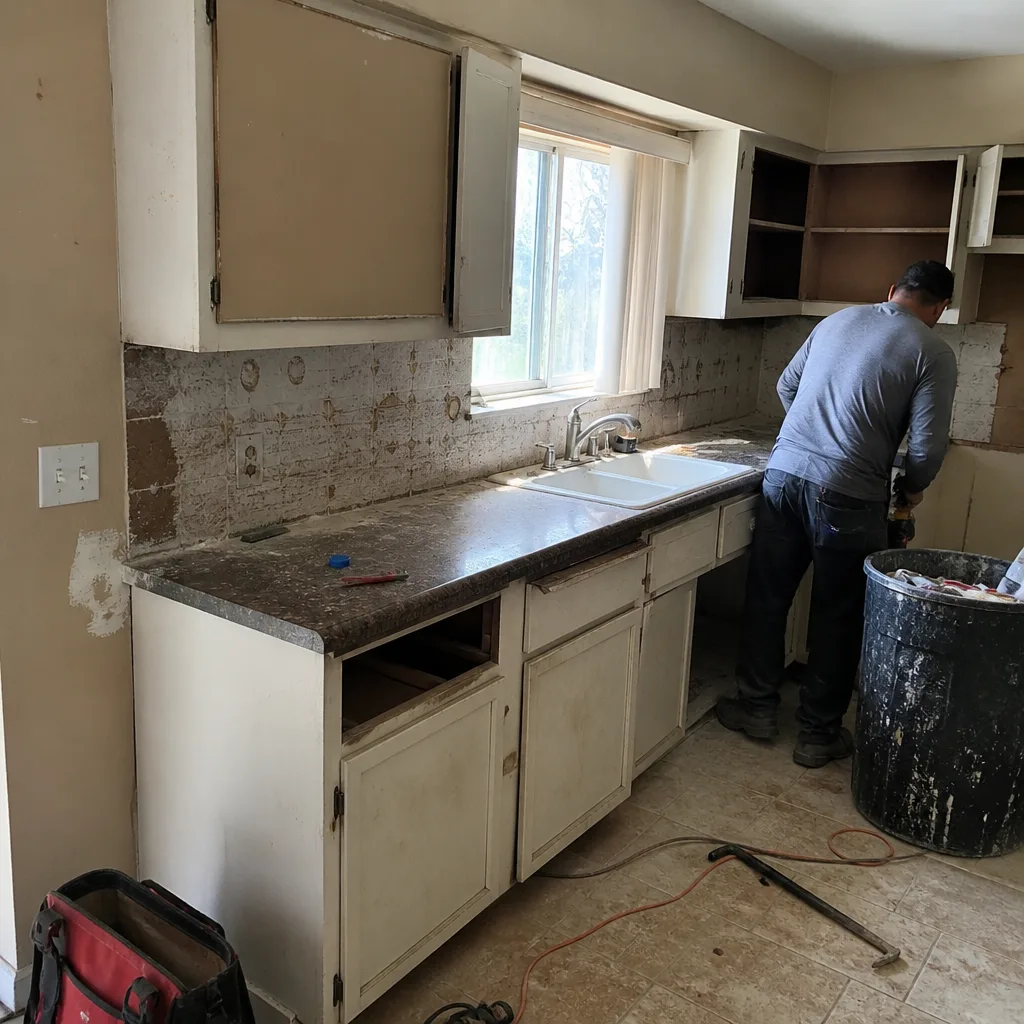 Before
 After
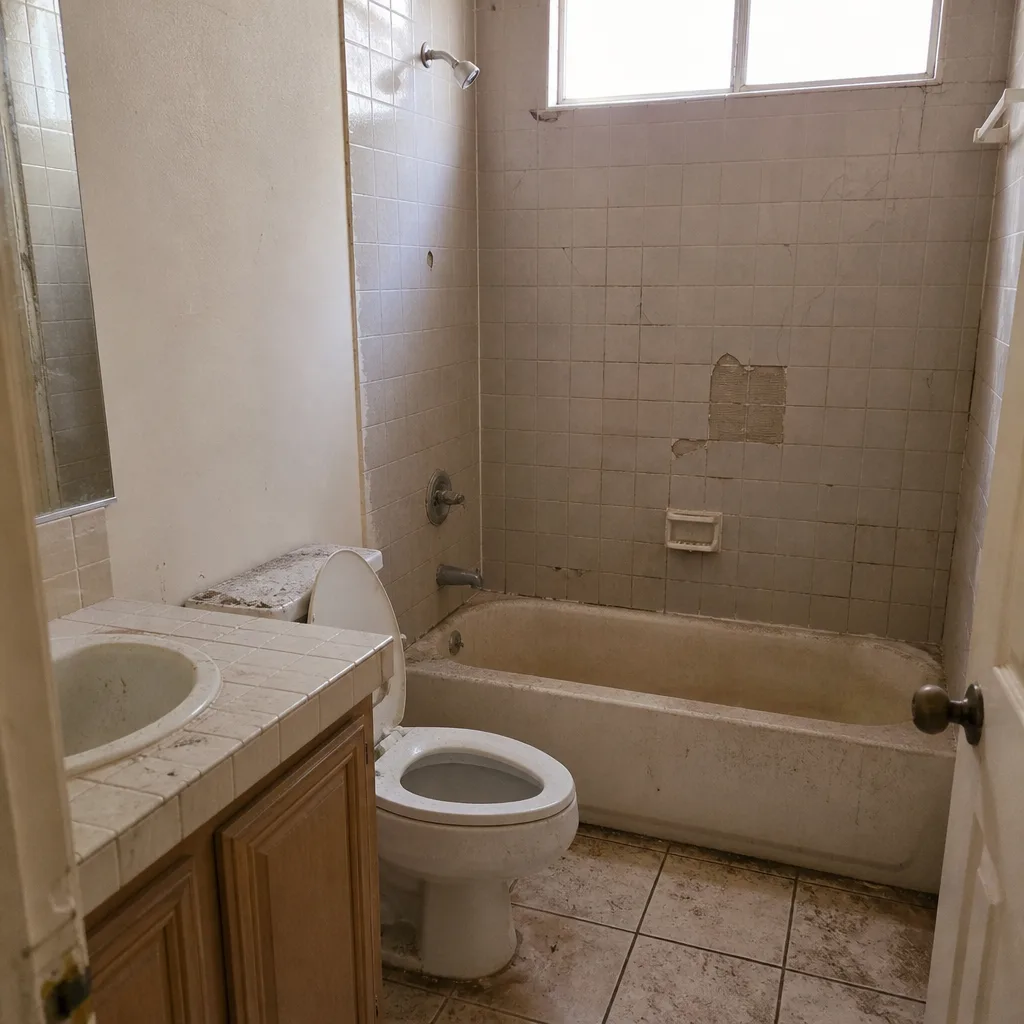 Before
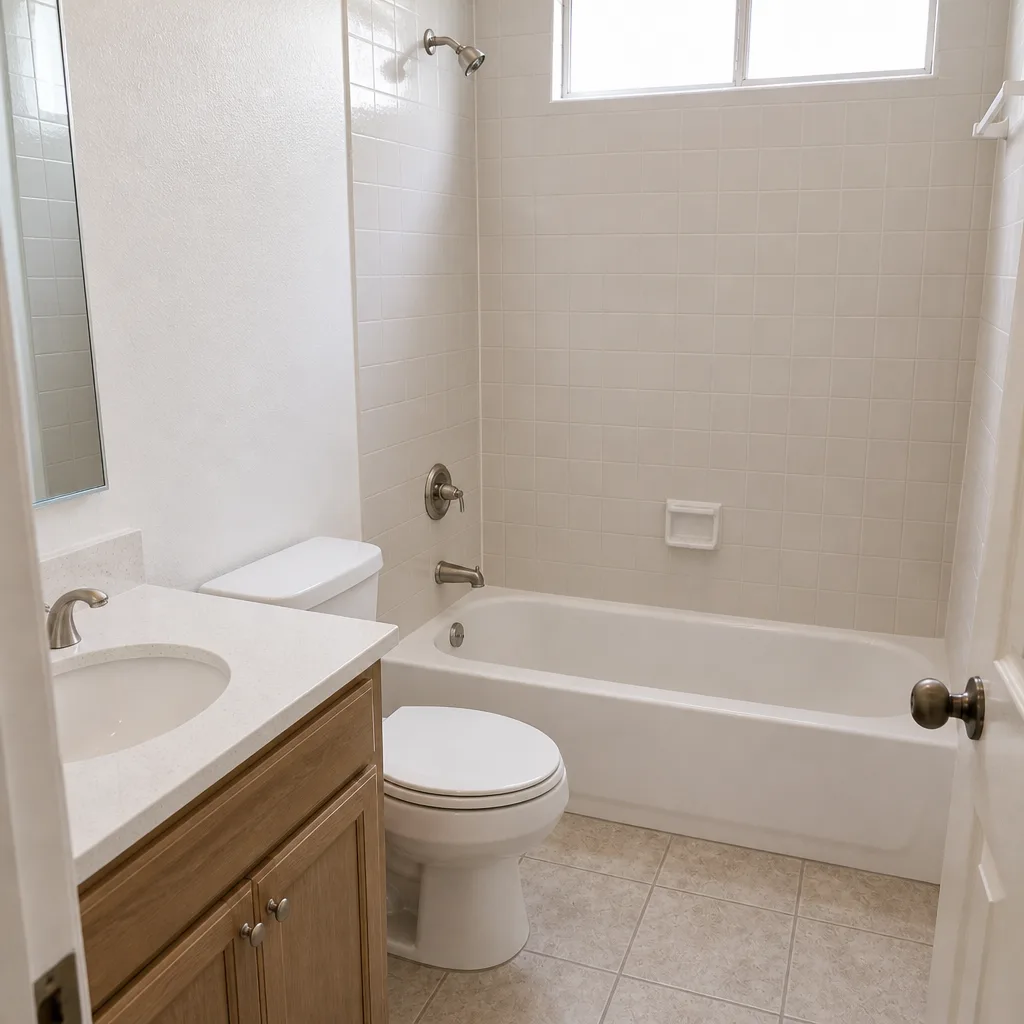 After
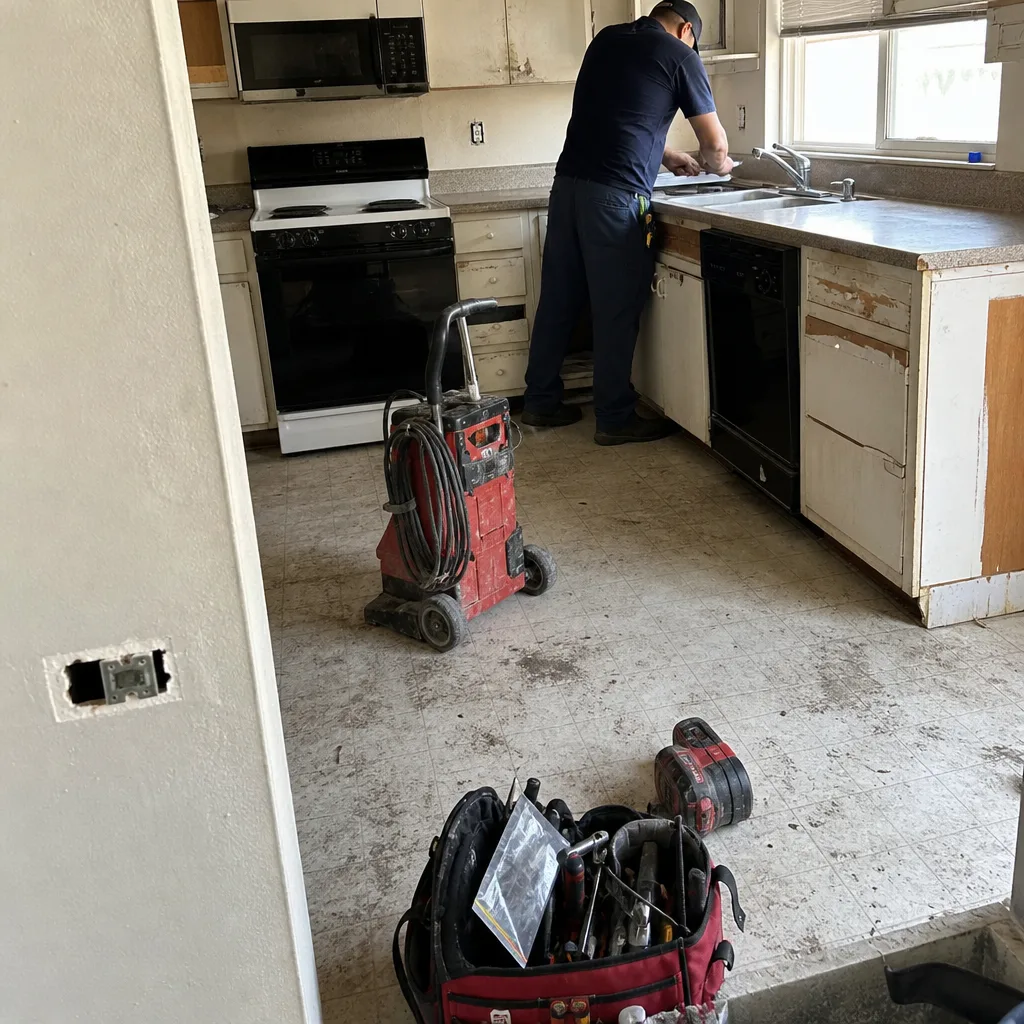 Before
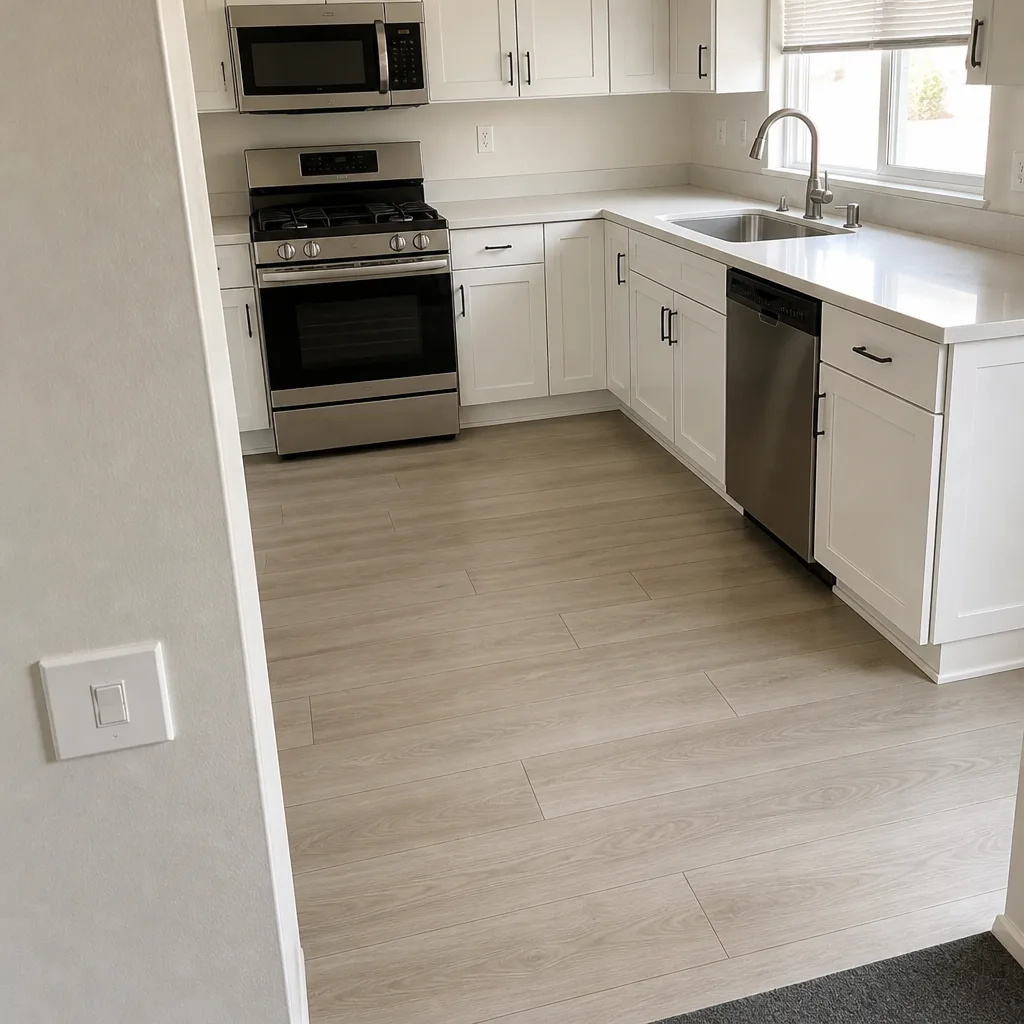 After
When to Call a Professional
Call a contractor immediately when water is actively entering the building envelope, when wind damage has opened a roof or wall to the weather, when structural elements appear compromised or a ceiling is sagging, when standing water is present indoors or against the foundation and hasn’t drained, or when an HVAC failure has wet the ceiling or a wall cavity. In those situations speed matters and delay is expensive. If you’re not sure whether your situation meets that bar, call anyway and describe it. A trained eye on the phone will tell you whether you have an emergency or a routine repair, and that assessment is free. If the situation involves structural risk or electrical exposure, get the occupants out first and then make the call.
For pre-season inspections, roof condition assessments, and non-urgent envelope hardening, call during planned work hours. Either way, the call is the same number. Construction Summerlin offers free estimates in Summerlin: call (844) 797-3059. We answer 24/7, with fast dispatch from 7am to 7pm, Sunday through Friday.
Frequently Asked Questions
Shut off the water or power to the affected area if it’s safely reachable, then get people out of the wet zone and start moving water out with what you have. Call your contractor next, not your insurance company first. Document the active water with photographs before you move anything, and don’t attempt roof work or clear a condensate line yourself. Call (844) 797-3059 for an exact quote; estimates are free.
Usually not under a standard policy, because water that enters from outside is commonly treated as flood, which is typically a separate coverage with a waiting period. Sudden accidental discharge from a failed interior component is more often covered. Read your exclusions or call your agent to confirm what you carry. For the repair scope itself, call (844) 797-3059; estimates are free.
There’s no flat number because the scope varies with the extent of damage, and we don’t price without seeing the situation. What we do guarantee is a free estimate and a written line-item quote before any work starts, with fixed pricing and no change orders. Call (844) 797-3059 to schedule the assessment.
No, as long as you’re doing temporary mitigation, not permanent repair. Common policy language requires you to prevent further damage, and mitigation with documentation actually strengthens a claim. What you should not do is complete permanent repairs or dispose of damaged materials before the adjuster and contractor have both documented the loss. Call (844) 797-3059 to have a contractor on site for that documentation.
It depends on the scope and on permit timelines, which is why the full scope should be written and reviewed before any work is scheduled. A contained envelope repair is a much shorter timeline than a multi-trade rebuild. Getting an honest scope first is the only reliable way to answer the timeline question for your specific job. Call (844) 797-3059 to get a free estimate and a written scope.
Yes, and that’s the structure we recommend. A full-scope contractor can handle mitigation, structural repair, roofing, windows and doors, and interior restoration under one contract and one written scope, which removes handoff delays between trades. Construction Summerlin offers free estimates for exactly this. Call (844) 797-3059.
The Bottom Line
Summerlin construction emergencies follow a pattern: monsoon flooding, HVAC condensate failure, and windstorm roof damage are the events, and deferred maintenance is the setup. The most useful work you can do is the work you do before the season: verify your insurance coverage, document your contact sequence, inspect your roof and grading, maintain your HVAC drain, and check your fence and envelope. When the event does happen, containment in the first two hours and clean documentation are what separate a repair from a rebuild. One contractor who can hold the whole scope, from the driveway to the roofline, removes the coordination tax that costs homeowners time and money. Call (844) 797-3059 to schedule a free estimate before storm season. We answer 24/7, with fast dispatch from 7am to 7pm, Sunday through Friday.
Written by the team at Construction Summerlin.